
A vaccine is a biological preparation that provides active
acquired immunity to a particular disease. A vaccine typically contains an
agent that resembles a disease-causing microorganism and is often made from
weakened or killed forms of the microbe, its toxins or one of its surface
proteins. The agent stimulates the body's immune system to recognize the agent
as a threat, destroy it, and keep a record of it, so that the immune system can
more easily recognize and destroy any of these microorganisms that it later
encounters
Vaccines have historically been the most effective means to
fight and eradicate infectious diseases. Limitations to their effectiveness do
exist. Sometimes, protection fails
because the host's immune system doesn’t respond adequately or at all. Lack of
response commonly results from clinical factors such as diabetes, steroid use,
HIV infection or age. However it also might fail for genetic reasons.
Adjuvants commonly are used to boost immune response,
particularly for older people (50–75 years and up), whose immune response to a
simple vaccine may have weakened.
Vaccines are dead or inactivated organisms or purified products
derived from them.
There are several types of vaccines in use. These represent different strategies used to
try to reduce risk of illness, while retaining the ability to induce a
beneficial immune response.
Some vaccines contain inactivated, but previously virulent,
micro-organisms that have been destroyed with chemicals, heat, radioactivity,
or antibiotics. Examples are influenza, cholera, bubonic plague, polio,
hepatitis A, and rabies.
Some vaccines contain live, attenuated microorganisms. Many
of these are active viruses that have been cultivated under conditions that
disable their virulent properties, or that use closely related but less
dangerous organisms to produce a broad immune response. Although most
attenuated vaccines are viral, some are bacterial in nature. Examples include
the viral diseases yellow fever, measles, rubella, and mumps, and the bacterial
disease typhoid.
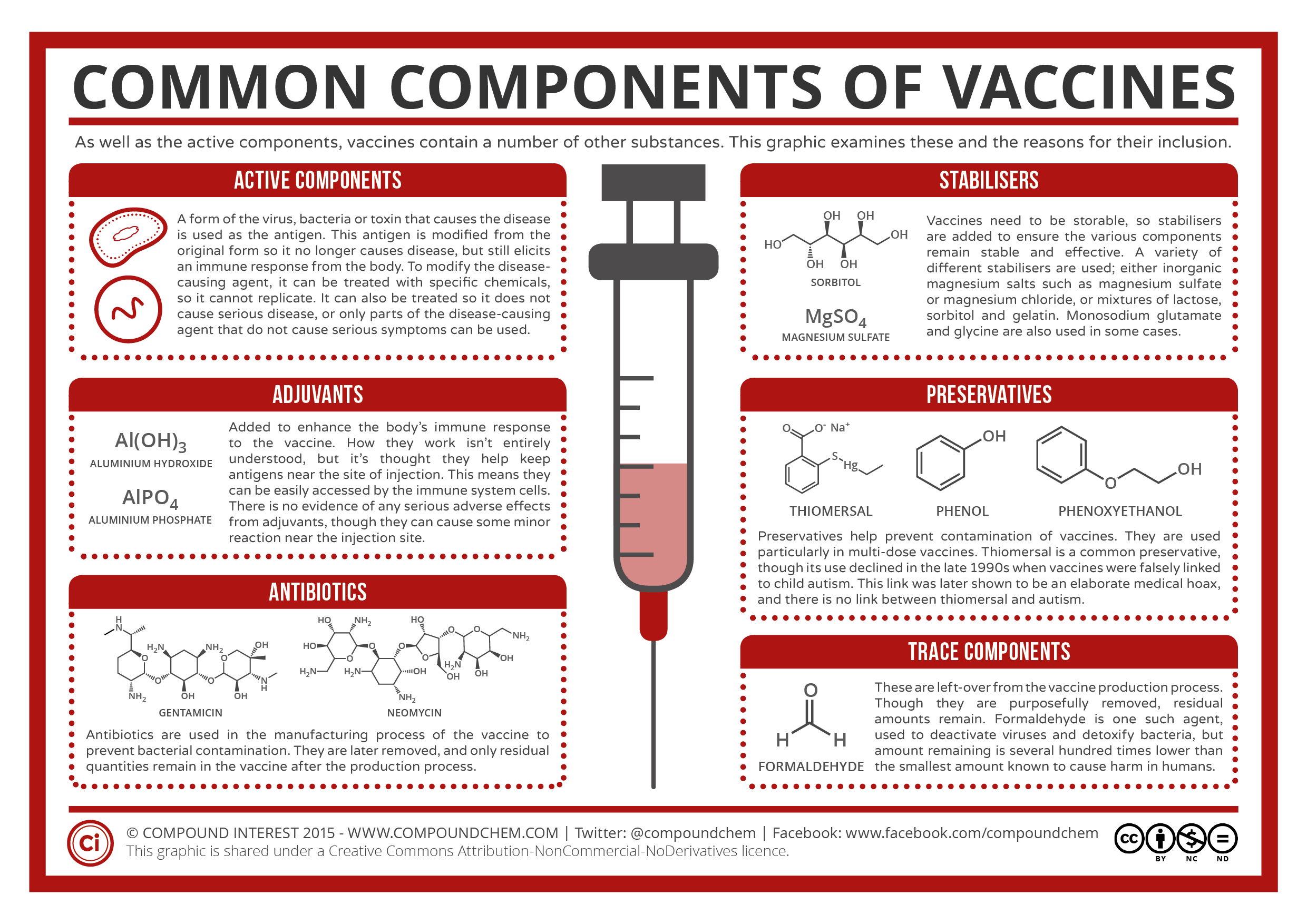
The infographic above from Compound Interest shows the common components of vaccines.
When making vaccines, antibiotics can be used to prevent
bacterial contamination. Although these are removed after manufacture, trace
amounts can still remain in the final vaccine. Antibiotics that often cause
adverse allergic reactions, such as penicillins, are avoided, in favour of
antibiotics such as gentamycin and neomycin.
For more information visit:-


